What the heck is a reiki massage??

A reiki massage session with Sarah Pyke.
Unless you’ve been living under a rock you probably know what massage is, and have likely experienced it in some way at some point. People have been using their hands for healing since the dawn of time! It’s certainly nothing new. And you’ve likely heard of reiki before, too, even if you’re unsure what it means. I know I had a lot of misconceptions about the practice before I looked into it and experienced it for myself, and I know that a lot of people are in the same boat. But now I’m soooo glad that I opened my mind up to the possibilities of energy healing, because it really is a gift!
I love combining simple, traditional relaxation massage with reiki work. I find the two encourage deeper levels of grounding and ease, which results in a really beautiful exchange. The sense of peace and calm I feel is next-level, and not just on a physical level. A reiki massage involves gently massaging the body with oil to settle the nervous system while also intentionally channeling reiki into the energy field.
Massage has always been spiritual to me. I was an RMT for 10 years and long before I ever experienced a reiki treatment I could feel that there was a very real intensification of that indescribable lifeforce energy while a massage treatment was going on. Not just on the body or in the tissues, but permeating the whole room! My career saw me working in some really fantastic spas. There would be times that you’d walk down the hall on your way to fold laundry and someone would have their treatment room door open, cleaning up and flipping the room for their next client, and that glorious energy would be pouring out into the hall. Someone in that room had been so relaxed, and maybe they had released and let go of something heavy and had come out lighter, or they’d fallen asleep (or better yet, been in that dreamy space on the edge of sleep). It was potent! Almost intoxicating just to be around (and I know the folks I’ve worked with over the years can remember that feeling). I wrote a blog post in 2019 titled “Massage Therapy is Spiritual AF” where I basically described this phenomenon. It would be another 5 years before I was ready to lean all the way into this idea though.

A treatment room at Spirit Spa, Downtown Halifax (one of several top spas I had the pleasure of working in)
After 10 years as an RMT I was ready for a change. I knew I wanted to keep relaxation bodywork in the picture because those were my favourite types of treatments to give. But I wanted something more. That’s when reiki entered my life.
Why energy work?
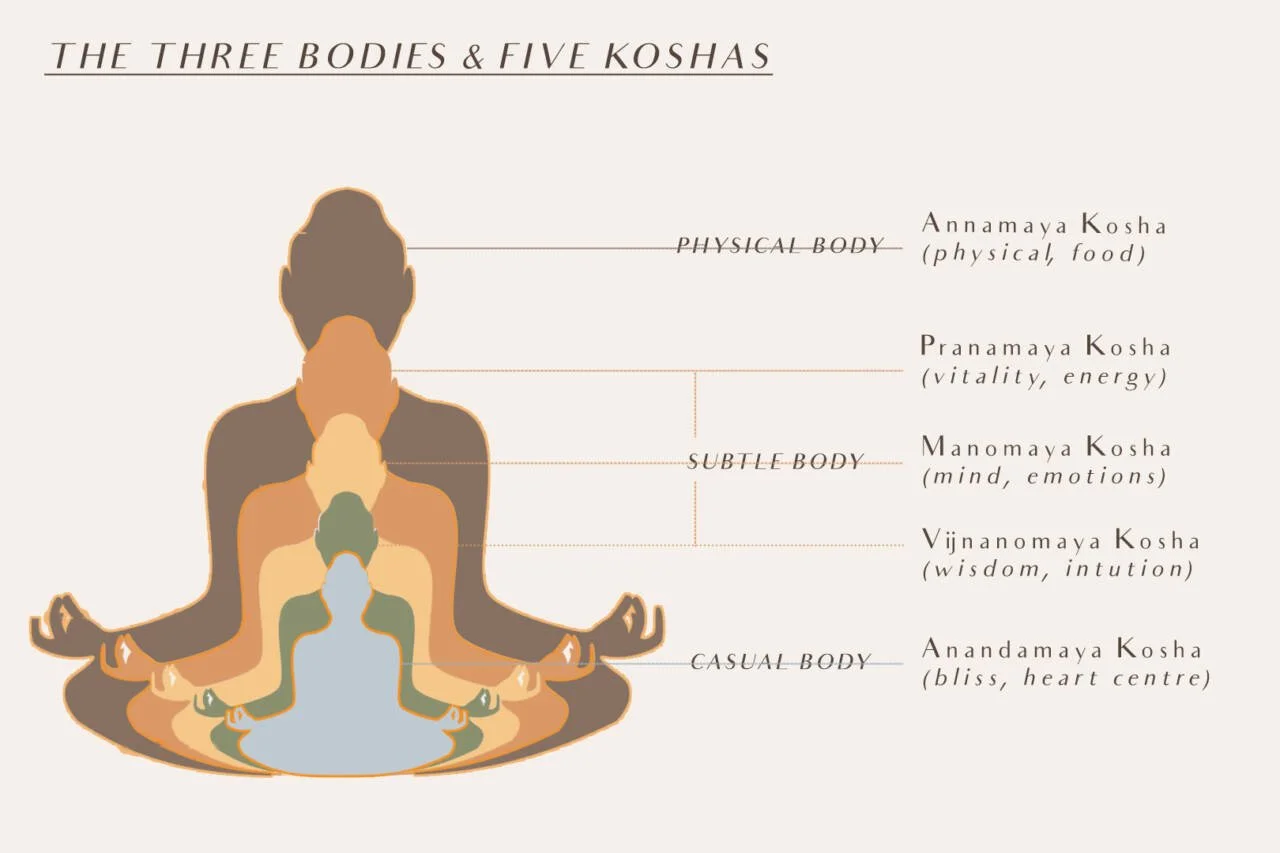
Some of the oldest healthcare systems in the world not only acknowledge the existence of an invisible lifeforce energy, but actually treat it as vital for wellbeing and health. In Japan this energy is called ki, and you can think of it like the Chinese variation, qi (chi), which is a crucial aspect of the ancient healing practices of Traditional Chinese Medicine (TCM). In Sanskrit, the word for this energy is prana and it also has an important role in India’s ancient healing system, Ayurveda. These enduring health practices promote the wisdom that in order to truly be “well” we need to address the COMPLETE body, which includes the emotional, energetic, and mental bodies as well as the physical. Breathwork, restorative movement, intentional diet, massage, and meditation are all pillars of these two time-tested medicine systems (which have been popular and effective for thousands of years).
The meeting of physical relaxation with energetic healing can have a profound effect on your overall wellbeing. The massage calms your nervous system, releases oxytocin and other pleasant chemicals, eases minor aches and pains*, and nourishes your skin, and the reiki seems to amplify all of this. It’s heavenly. Having a deep and restful sleep after the treatment, a reduction in pain, anxiety, stress, and overwhelm, and a healthy emotional release have all been reported after a reiki massage treatment. And while the immediate benefits last a day or two, I find the mental and emotional enhancements from reiki specifically (like deep insight and intuition, boosted creativity, and improved focus) provide long lasting rewards for those who are able to take action. People often talk about their ability to tackle problems with newfound clarity post session - I suggest taking a nice bath or shower, journaling, and then having a nap to really lean in to the guidance that might be coming into focus after a session.
What is reiki?
Reiki is a practice that aims to increase the flow of ki within the body and energy field in order to promote holistic balance. This is achieved by a reiki practitioner placing their hands on or just above the receiver. Reiki flows from the practitioner’s hands into the energy channels of the receiver. From there it flows where it’s needed throughout the body and energy fields! Reiki originated in Japan; rei means spiritual or sacred in Japanese and ki is this unseen energy I can’t stop talking about.
While it might seem like ki is coming from the reiki practitioner themselves, it’s not! The practitioner is simply a conduit, connecting the receiver to the source of this cosmic energy and allowing them to draw in what they need. You can imagine the reiki practitioner as a living straw that the receiver uses to slurp up delicious ki, straight from the source. I can say that as a reiki practitioner myself, I have yet to feel energetically drained by giving a treatment to someone else. In fact, the opposite is usually true! It’s a beautiful feeling.
Reiki is also intimately linked to the chakras, which are spinning wheels of energy located along your spine, beginning at the tailbone and going up to the crown. We’ll discuss chakras in a little bit, but for now, here’s a visual. You can imagine energy traveling along the spine and arriving at each of these wheels before being distributed along the other channels in the body.

The seven primary chakras displayed over an outline of a seated person, showing where the chakras are located in relation to the spine.
And this is the general idea of reiki treatment. The practitioner uses their hands with intention to channel this energy into your own energy pathways to reinvigorate and balance areas that may have fallen out of line over time. Science calls the balance that the human body is constantly seeking “homeostasis”, and this is exactly what we’re looking for in our subtle energetic bodies as well. We want vital energy to reach our organs and tissues for optimal health and we want balanced energy to help us with personal expression and emotional processing. A reiki treatment clears away energetic debris that isn’t helpful anymore, and sends new stuff down the pipes.
And what about the chakras?
Chakra means “wheel” in Sanskrit. In ancient understandings, the chakras are energy wheels in the body that spin smoothly when balanced. However, when they fall out of balance (due to trauma, lifestyle choices, illness, big life changes, etc.) a person may experience physical, emotional, or spiritual troubles. Chakras may be overactive or underactive, or completely blocked! As you can see in the graphic above, each one is associated with different areas of life. Evaluating your life and the challenges you face can give you clues as to which chakras need work; for instance, if you have trouble expressing yourself you may want to investigate the throat chakra. There are lots of things you can do to bring your chakras back into balance. Getting a reiki treatment is one of them! Once a chakra has been re-aligned following a time of imbalance, you’ll notice subtle (and sometimes not so subtle) improvements in many areas of your life - health, relationships and finances will improve, amazing opportunities will suddenly present themselves, and things in your life will flow with more ease.

An example of a meridian; the channels in the body through which lifeforce energy travels, according to Traditional Chinese Medicine.
How does someone become a reiki practitioner?
Unlike other modalities, reiki is taught through initiation more than instructions. The practitioner-to-be is attuned to reiki by a master who has completed all 3 levels. Once attuned, a practitioner is essentially “tuned in” to the reiki frequency and can turn on the flow of it whenever they’d like.
Following level 1 attunement comes a period of 21 days of daily self-treatment and integration. During this time the newly attuned may experience physical and emotional weirdness as their energy field undergoes a drastic cleanup. I certainly did! They’ll also be shown areas of their life that they need to improve on. My reiki master told me that was one of the things that kept her committed to reiki when she first started; it was a warm invitation to fix the things that needed fixing. She liked who she was becoming as she followed this guidance. Once someone has completed their level 2 initiation, they are able to work with the public and may also send reiki across distances and time. Once they receive level 3, they’re able to initiate others and are also eligible for registration in reiki associations.
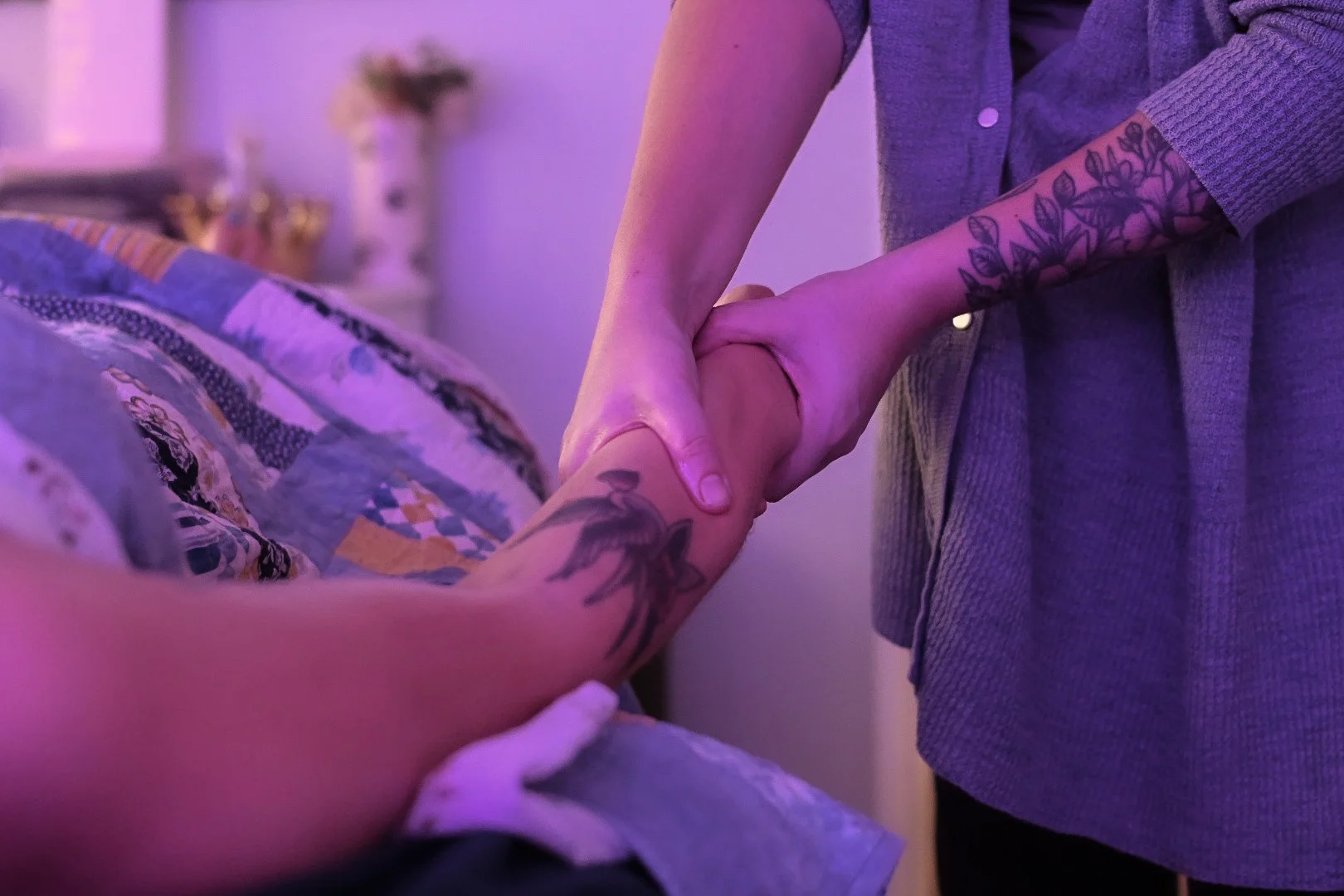
Massaging someone’s arm during a reiki massage treatment.
Of course, there’s more to being a reiki practitioner than just becoming initiated. If you’re curious, you should check back here next week for a new blog post about the responsibilities and rewards of practicing reiki…
And If you’d like to experience this dreamy combination of relaxation massage and reiki energy work, don’t hesitate to reach out to me! I’m currently accepting new clients twice a week in downtown Fredericton. Appointments can be booked online or via email: sarah.pyke123@gmail.com.
*Please note that this massage is not considered therapeutic. I am no longer an RMT, and I don’t provide remedial treatments for specific physical issues. I can refer you to several fantastic and safe massage therapists in the Fredericton area though!